Press releases and news 2012

clear
  • ProEcoWine – bio-protection for healthy grapes

    Fraunhofer IGB Press release / December 14, 2012

    ProEcoWine.

    Fungi like downy mildew reduce wine yield and impair wine quality. In conventional as well as organic viticulture grape growers usually apply copper for preventing these fungal diseases. In the ProEcoWine project funded by the EU, on behalf of five companies the Fraunhofer IGB, the University of West Hungary and Laboratoire PHENOBIO develop a novel bio-plant protection product to replace copper fungicides.

    more info
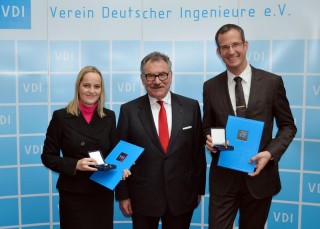
  • VDI Ring of Honor for Dr. Petra Kluger

    Fraunhofer IGB News / November 21, 2012

    © VDI

    Dr. Petra Kluger was awarded the VDI Ring of Honor for her interdisciplinary research into the development of biomaterials for regenerative medicine.

    more info
  • © Fraunhofer IGB

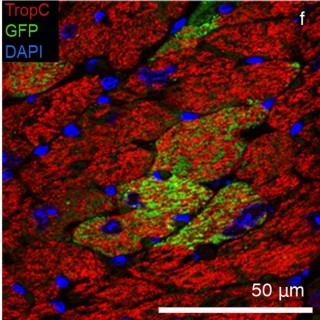
    Breakthrough in heart research: The research team from Professor Katja Schenke-Layland of the Fraunhofer Institute for Interfacial Engineering and Biotechnology IGB in Stuttgart has discovered cell surface markers that enable the identification and isolation of living functional cardiovascular progenitor cells (CPCs). For the first time, therapeutically relevant CPCs can be derived from induced-pluripotent stem cells (iPS) cells. CPCs, which are typically only found in fetal development, can become all of the different cell types of the heart and can integrate into heart muscle tissue after injection.

    more info
  • Lubricants from vegetable oil

    Press release, Fraunhofer-Gesellschaft / October 02, 2012

    Zellen des Brandpilzes Ustilago maydis
    © Fraunhofer IGB

    Oil-independence is the dream of many countries that lack raw materials. Nevertheless, black gold still retains its dominant role as a power source, and also serves as a basic material for the chemical industry. In order to change this, researchers started the “Integrated BioProduction” project. At the Fraunhofer Center for Chemical-Biotechnological Processes CBP in Leuna, the pilot plant-scale production of epoxides, made from domestic vegetable oils, begins in October. The intermediate chemical products support the production of lubricants, surfactants and emulsifiers.

    more info
  • Multi-talented enzyme – produced on large-scale

    Press release, Fraunhofer-Gesellschaft / October 02, 2012

    Fermentationsanlage
    © Fraunhofer IGB

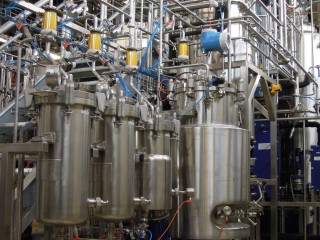
    Enzymes remove spots from our laundry, whiten paper and help with brewing beer. To wit: They facilitate many industrial processes. In many cases, enzymes are obtained from fruits. However, if the harvest is poor, this might lead to shortfalls. Researchers therefore designed a process to produce enzymes microbiologically. A multifunctional facility now opening in Leuna should help with adapting these new processes to an industrial scale.

    more info
  • Wood completely broken down into its component parts

    Press release, Fraunhofer-Gesellschaft / October 02, 2012

    macerated beech wood
    © Fraunhofer IGB

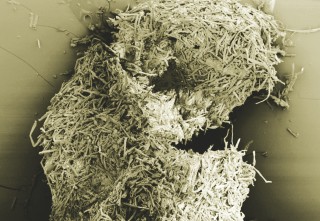
    Crude oil is getting scarce. This is why researchers are seeking to substitute petroleum-based products – like plastics – with sustainable raw materials. Waste wood, divided into lignin and cellulose, could serve as a raw material. A pilot plant has been set up to handle this division on a larger scale. The pilot plant opened on October 2 as part of the new building constructed for the Fraunhofer Center for Chemical-Biotechnological Processes CBP in Leuna.

    more info
  • Using wastewater as fertilizer

    Forschung Kompakt, Fraunhofer-Gesellschaft / August 20, 2012

    © Fraunhofer IGB

    Sewage sludge, wastewater and liquid manure are valuable sources of fertilizer for food production. Fraunhofer researchers have now developed a chemical-free, eco-friendly process that enables the recovered salts to be converted directly into organic food for crop plants.

    more info
  • Dr. Pranee Inprakhon, lecturer of Mahidol University, Bangkok Thailand

    Dr. Pranee Inprakhon, lecturer of Mahidol University, Bangkok Thailand, has been awarded a Marie Curie International Incoming Fellowship (IIF) from the European Union FP7 to work on a project entitled “AquaCat –Tailors made lipases for synthetic catalysis in biphasic media: From poly(lactone) applications towards novel sugars esters” at Project Group BioCat, Fraunhofer Institute for Interfacial Engineering and Biotechnology IGB, Straubing. The project will focus on the development of innovative, greener process using renewable resources for synthesis of products of commercial interest.

    more info
  • Non-slip tracheal implants

    Forschung Kompakt, Fraunhofer-Gesellschaft / July 02, 2012

    © Leufen Medical GmbH

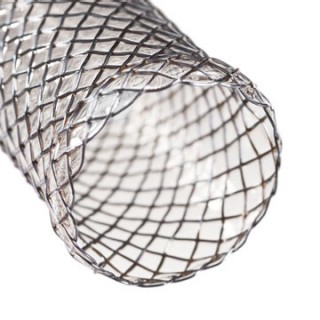
    When coronary blood vessels are constricted, cardiologists try to prevent a heart attack by widening them with small grid-like implants called stents, which stabilize the veins and arteries, improve the fl ow of blood and prevent vascular obliteration. A lesser known fact is that stents can be used to treat pathological constriction of the windpipe. This kind of respiratory stenosis, which may be caused by tumors, chronic infections or congenital deformities, can be life-threatening. The metal or plastic stents are designed to enlarge the trachea and prevent it from closing up altogether.

    more info
  • Poster award for Silke Palzer

    Fraunhofer IGB News / June 11, 2012

    At the 18th Conference of the International Society for Human and Animal Mycology ISHAM from June 11-15, 2012 in Berlin, Silke Palzer from the Fraunhofer IGB’s Molecular Biotechnology Department received one of ten prizes awarded with 300 euros for her poster “An expanded genetic code in C. albicans to study molecular interactions in vivo”.

    more info
  • ACHEMA 2012 / 2012

    Compact and flexible thermal storage

    Forschung Kompakt, Fraunhofer-Gesellschaft  / June 01, 2012

    © Fraunhofer IGB

    Biogas plants, combined heat and power plants don’t just generate electricity, they also produce heat. However, unlike the electricity they yield, the heat generally dissipates unused. A new technology is set to change this: It will allow the heat to be stored lossfree in the smallest of spaces for lengthy periods of time, for use as and when required.

    more info
  • Hannover Messe 2012 / 2012

    Use less water, producing energy and fertilizer at the same time

    Press Release / April 19, 2012

    © Fraunhofer IGB

    Water is a valuable resource. New technologies are making it easier to handle drinking water responsibly, purify wastewater effectively and even recover biogas and fertilizer. Fraunhofer researchers will be showing how this is done at the Hannover Fair (23 - 27 April) in the House of Sustainability (Hall 2).

    more info
  • Poster award for Petra Keller

    Fraunhofer IGB News / April 02, 2012

    Petra Keller from the Fraunhofer IGB’s Molecular Biotechnology Department was awarded one of six prizes at the 11th European Conference on Fungal Genetics from March 30 to April 2, 2012 in Marburg for her poster “Identification and characterization of novel antifungal compounds against fungal human pathogens”.

    more info
  • Organic farming without cabbage flies

    Press release / March 16, 2012

    © Fraunhofer IGB

    When cabbage root flies lay their eggs on freshly planted vegetables, organic farmers often lose their entire crop. In the future, pellets made of cyanobacteria and fermentation residues from biogas plants will repel these insects in an ecologically compatible manner – and simultaneously fertilize the plants. Researchers are presenting the pellets at the Hannover Messe from April 23–27 (Hall 26, Booth C08).

    more info
  • © Fraunhofer IGB

    Large quantities of plant stalks, fruit and vegetable skins, husks and pods occur as waste in organic farming. In an EU-funded project researchers at the Fraunhofer IGB, in cooperation with international partners from science and industry, intend to use this waste to produce biosurfactants for natural cosmetics.

    more info
  • HANNOVER MESSE 2012 / 2012

    Environmentally-friendly cleaning and washing

    Fraunhofer research use  / March 02, 2012

    © Fraunhofer IGB/Frank Kleinbach

    More and more everyday products are based on renewable resources, with household cleaners now containing active cleaning substances (surfactants) made from plant oils and sugar. These fat and dirt removers are especially environmentally friendly and effective when produced using biotechnology, with the aid of fungi and bacteria.

    more info
  • Fuel from market waste

    Fraunhofer research use / February 07, 2012

    © Fraunhofer IGB

    Mushy tomatoes, brown bananas and overripe cherries – to date, waste from wholesale markets has ended up on the compost heap at best. In future it will be put to better use: Researchers have developed a new facility that ferments this waste to make methane, which can be used to power vehicles.

    more info
  • Biomass transferred into valuable chemicals

    Press Release / February 02, 2012

    Funded by the Knowledge Based Bio Economy program of the EU, the 13 M€ BioConSepT project starts in February 2012. The project wants to convince and inspire stakeholders of the Bio-based Economy by demonstrating the complete feasibility of an integrated chain approach, which is regarded as the basis for the next generation industrial White Biotechnology processes. The aim is to deliver processes that convert 2nd generation biomass into valuable chemicals, which are 30 percent cheaper and 30 percent more sustainable than the corresponding chemical routes or the biotechnology processes starting from 1st generation feedstocks like glucose.

    more info
  • BioEconomy cluster wins Leading-Edge Cluster competition

    Fraunhofer IGB News / February 01, 2012

    In 2011, the Fraunhofer CBP in Leuna took part in the third round of the Leading-Edge Cluster competition launched by Germany Federal Ministry of Education and Research (BMBF), competing against companies from the sectors of chemical production, the petroleum industry, energy generation, the wood industry and plant engineering, as well as numerous other research institutions. The BioEconomy Cluster, under the scientific coordination of Professor Thomas Hirth, was named one of five winners in January 2012.

    more info