HypoWave+ – Implementation of a hydroponic system as a sustainable innovation for resource-efficient agricultural water reuse

Regional competitions over the resource water are not uncommon. Due to climate change, urbanization and pollution of water resources, these conflicts of use could intensify in the coming decades. Even in Germany that is rich in water, conflicts of use are becoming more frequent. This is why new concepts and processes for water reuse are needed. In the BMBF research project HypoWave, hydroponic plant production using water reuse was piloted for the first time between 2016 and 2020. In the follow-up project HypoWave+, the research network in the Gifhorn region was supporting the large-scale implementation of a hydroponic system using water reuse. 

HYPOWAVE.
The treatment of the water is based on the needs for vegetable cultivation – nutrients should be preserved, pollutants removed.
© Thomas Dockhorn, TU Braunschweig
The treatment of the water is based on the needs for vegetable cultivation – nutrients should be preserved, pollutants removed.

Challenges and background

Climate change, urbanization and the pollution of conventional water resources will in the coming decades lead to rising regional competition over the use of the increasingly scarce water resources. At the same time, there is a growing demand for regional vegetables that are produced in a resource-efficient way. For irrigation in agriculture, environmentally friendly water recycling can serve to increase the water supply. So far, there had been no large-scale implementation of the piloted HypoWave concept. This task has now being addressed in the follow-up project HypoWave+, which was coordinated by the TU Braunschweig.


Research approach

The aim of the transdisciplinary research network was to establish a new form of regional vegetable production. Based on the results of the HypoWave research project, farmers in the Gifhorn region decided to establish a company that produces hydroponically grown vegetables. HypoWave+ accompanied this project scientifically and investigated open questions in the areas of water treatment, vegetable production, intelligent process control, quality management and institutional arrangements. The aim was to further develop the marketability of hydroponically produced vegetables by means of environmentally friendly water recycling with the aim of applying it at other locations as well.

Within the framework of HypoWave+, Fraunhofer IGB has been working on the digitalization of the established processes. To this end, the team has been coordinating the work on integrated data acquisition and control of the water treatment and the greenhouse production, as well as on setting up and operating the infrastructure required for data acquisition and processing. In addition, the IGB coordinated the detection of (plant)-pathogenic microorganisms and viruses in the treated water and, together with other partners and actors on site, contributed its technical expertise on questions of acceptance and quality of the new process chain as well as on risk management.

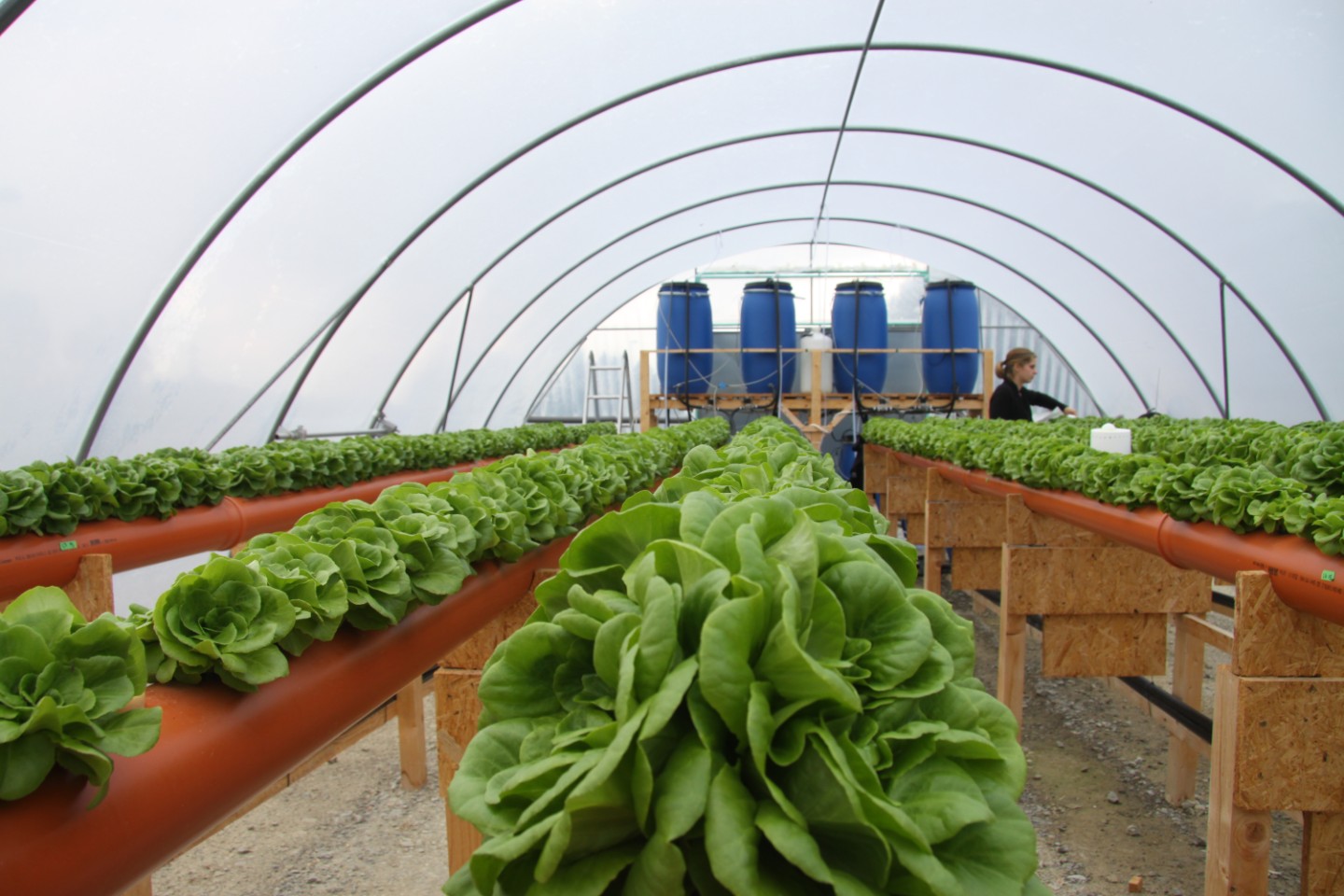
The lettuce seedlings do not need soil thanks to the hydroponic process.
© ISOE Wikom
In the research project HypoWave, which was funded by the BMBF from 2017 to 2019, hydroponic plant production using water reuse was piloted for the first time.
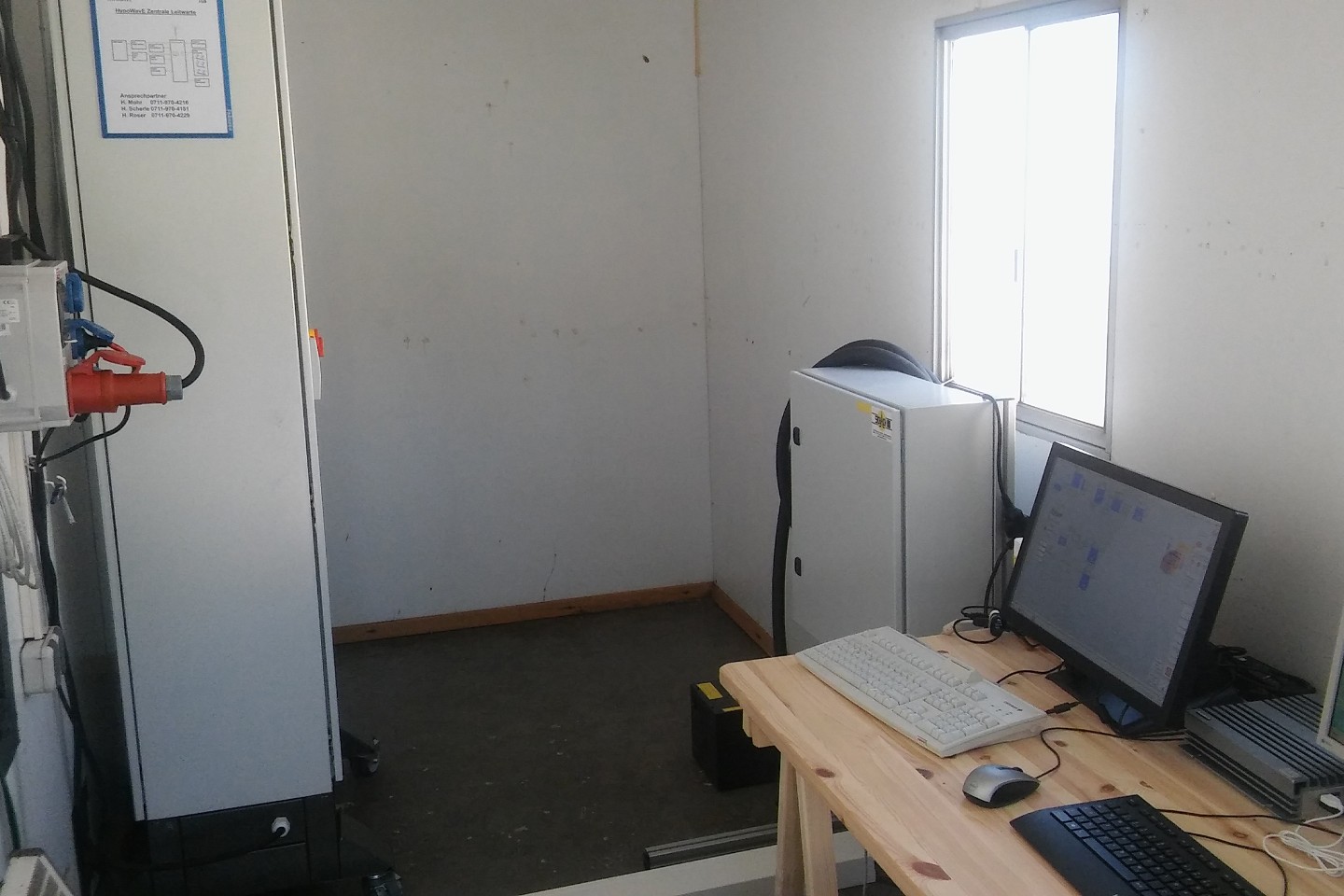
Control cabinet.
© Fraunhofer IGB
Control cabinet.
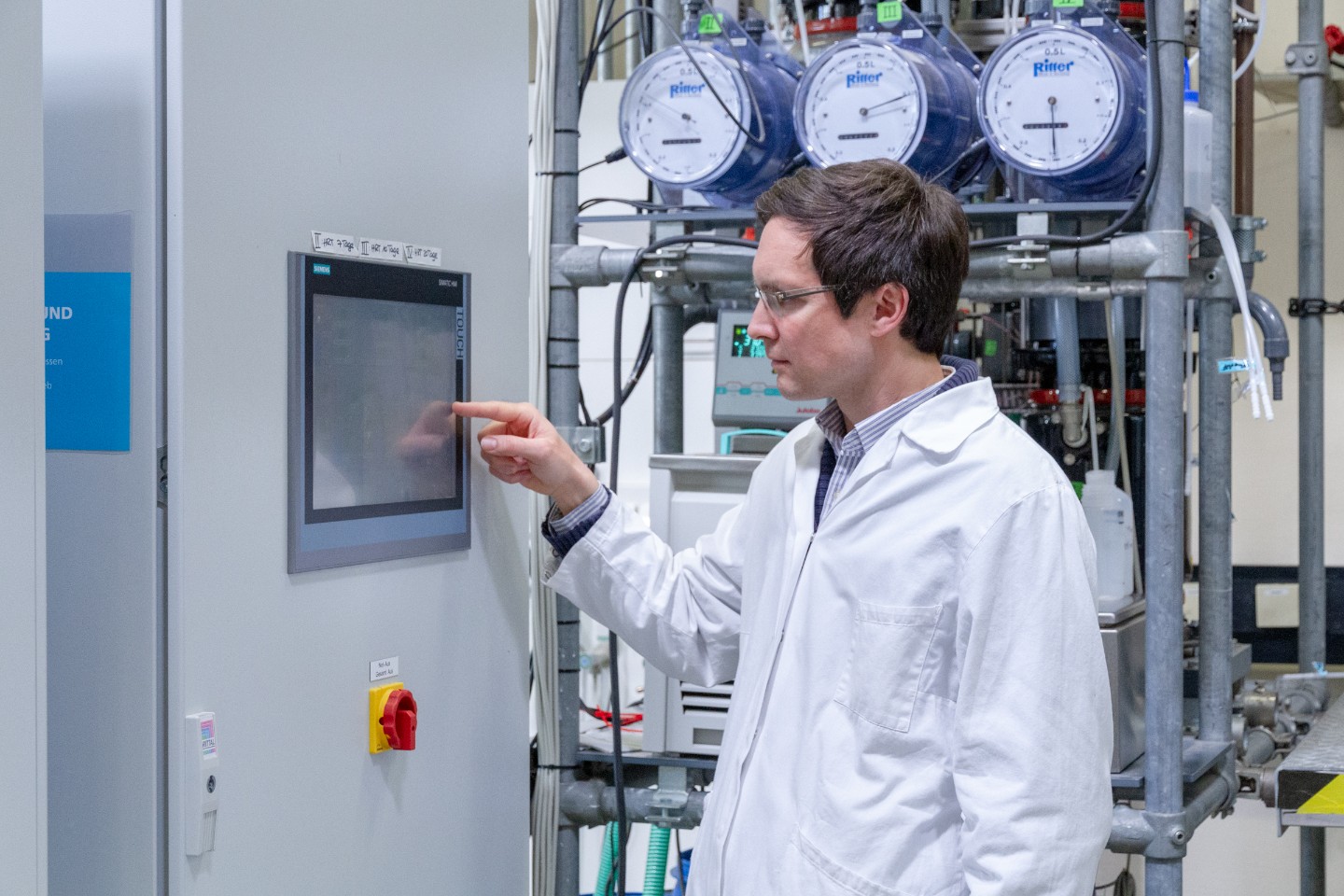
Thanks to biointelligent control systems, the water distribution and nutrient supply of the hydroponic system can be precisely regulated.
© Fraunhofer IGB
Thanks to biointelligent control systems, the water distribution and nutrient supply of the hydroponic system can be precisely regulated.

Results

Digitalization

The networking of water management and crop production system elements—a challenge due to the proprietary control logic of the individual components—was successfully implemented by Fraunhofer IGB. In addition, the extent to which artificial intelligence (artificial neural networks) can be used to optimize operations was also investigated. The work on integrating such AI elements is important in order to harness the potential of this rapidly developing technology for the requirements of water reuse. This can increase the efficiency of the resources used on the one hand and reduce the risks of closing the cycle on the other. This lays the foundation for the spread of water reuse in Germany and for the exportability of solutions developed in Germany.

Integrated quality management

As part of the integrated quality management system, Fraunhofer IGB has focused in particular on risk management. For example, a risk management plan (RMP) was developed in close cooperation with the partners involved in the implementation of water reuse in Weißenberge, which formed the basis for the successful application to the lower water authority in Gifhorn. This made the exemplary implementation of water reuse in Weißenberge possible in the first place. In addition, an integrated quality management concept was developed here in collaboration with ISOE, which was published and is thus also available for other applications [1, 2].

It was found that the risks to humans and the environment posed by water reuse in Weißenberge can be classified as low overall with the existing process chain. This was also confirmed by water and product analyses. Chemical and microbial risks were successfully addressed through water treatment and multiple barriers.

With regard to phytopathogenic microorganisms, exemplary studies were conducted at Fraunhofer IGB, which will allow for better classification and minimization of corresponding risks for water reuse in hydroponic systems in the future. While human pathogenic microorganisms are the focus in the context of water reuse, information on the introduction of plant pathogenic microorganisms, which can cause financial losses for farmers in particular, is very limited. Our investigations have shown that under Hypowave+ conditions, there is only a very low risk of damage from plant pathogenic microorganisms in treated water. Since the investigations used in the project are very cost-intensive, further methods were developed to simplify the detection of certain plant-pathogenic microorganisms and make it more accessible. This should provide a better data basis in the future, as measurability has been simplified [3].


Publications

  1. Winker, Martina/Marc Beckett/Thomas Dockhorn/Nico Domurath/Tim Gebhardt/Jorn Germer/Heide Kerber/ Christian Lampe/Marius Mohr/Stefan Pieper/Michaela Rohrbach/Engelbert Schramm (2025): Integrated Quality Management for Hydroponic Water Reuse – A Dual-Objective Approach. Water Reuse. https://doi.org/10.2166/wrd.2025.033
  2. Beckett, Marc/Marius Mohr/Martina Winker/Michaela Rohrbach/Antje Schwarzer/Tim Gebhardt/Thomas Dockhorn (2025): A critical assessment of the applicability of EU regulation 2020/741 for the development of a risk management plan for hydroponic water reuse. Water Reuse. https://doi.org/10.2166/wrd.2025.032
  3. Kriem, Lukas Simon, King, Neil, Niemann, Sinja, Vainshtein, Yevhen, Sonntag, Mirko (2025): Molecular Identification of Human and Plant Pathogens in Municipal Domestic Wastewater for Hydroponic System Applications, International Journal of Microbiology, 2025, 6958575, 14 pages. https://doi.org/10.1155/ijm/6958575

After isolating the target organisms from wastewater, their genomic material is amplified using specific probes. The subsequent qPCR allows the detection of existing viruses.
© Fraunhofer IGB
After isolating the target organisms from wastewater, their genomic material is amplified using specific probes. The subsequent qPCR allows the detection of existing viruses.

Molecular biological detection system for the detection of human pathogenic viruses in wastewater

To ensure the quality of hydroponic systems, the water used for irrigation needed to be examined for microbial as well as viral contamination. Common detection methods often fail to adequately detect viruses to their physical and biochemical properties.

To ensure the safety of the treated wastewater used for irrigation, we have established a molecular biological detection system at Fraunhofer IGB that reliably detects human pathogenic viruses. The detection method is based on qPCR technology. By utilizing highly specific probes, the detection of the most common human pathogenic viruses in wastewater is possible without causing inhibitory effects, which ensures reliable quality assurance for wastewater and crops. 

The molecular detection system enables rapid and automatable detection of human-pathogenic viruses in wastewater. Due to the parallel use of highly specific probes and primers, existing pathogens are reliably detected even in heavily contaminated water. In order to sufficiently detect viruses even in large volumes of treated wastewater, a method for virus concentration was established, that, in combination with subsequent molecular detection, can ensure high sensitivity.

Project information

Project title

HypoWave+ – Implementation of a hydroponic system as a sustainable innovation for resource-efficient agricultural water reuse


Project duration

February 2021 – April 2025


Project partners

  • Institute for Sanitary and Environmental Engineering, Technische Universität Braunschweig (Head of research project)
  • ISOE – Institute for Social-Ecological Research, Frankfurt am Main (Coordination)
  • Fraunhofer Institute for Interfacial Engineering and Biotechnology IGB, Stuttgart
  • University of Hohenheim, Stuttgart
  • IseBauern GmbH&Co. KG, Wahrenholz
  • Wasserverband Gifhorn
  • Abwasserverband Braunschweig
  • aquatune GmbH, a Xylem brand, Hahnstätten
  • Ankermann GmbH & Co. KG, Meine
  • Huber SE, Berching
  • INTEGAR – Institute of Horticulture Technologies GmbH, Dresden

Funding

The Federal Ministry of Education and Research (BMBF) is funding the project “HypoWave+ – Implementation of a Hydroponic System as a Sustainable Innovation for Resource-Efficient Agricultural Water Reuse” within the funding measure “Water Technologies: Water Reuse” as part of the federal research program on water “Wasser: N”. Wasser: N contributes to the BMBF “Research for Sustainability” (FONA) Strategy.

Federal Ministry of Education and Research.